
World travel outlook: International arrivals down 65% but a strong recovery could happen in 2021

- A new UN report reveals that international arrivals were down 65% overall in the first six months of 2020
- USD$460 billion has been lost in export revenues derived from cross-border tourism
- Revenue loss is five times that of the financial crisis of 2008/09
- A strong recovery is expected to happen in 2021, but only if the pandemic is brought under control
We knew it would be bad. But somehow seeing the hard numbers makes the extent of what COVID-19 has done to international tourism even clearer: the UNTWO’s (United Nations World Tourism Organisation) reveals that international tourist arrivals were down by 65% year-over-year from January through June 2020 – which equates to a loss of 440 million foreign visitors.
The plunge affects myriad sectors of national economies, from the hotel and hospitality sector through to all kinds of businesses that are either directly or indirectly reliant on a stream of foreign visitors throughout the year – schools, universities, and colleges included. Hundreds of millions of jobs have been lost due to the pandemic, and a significant portion of these losses can be traced back to depressed tourism industries.
The extent of the damage is much more severe than that inflicted by the global economic crisis that occurred in 2009: USD$460 billion has been lost in export revenues derived from cross-border tourism – more than five times the revenue loss from tourism recorded in 2009.
There has been some relief – in the form of many borders reopening to varying degrees in the third quarter of 2020. The UNTWO estimates that as of early September, about half (53%) of the world’s destinations had opened their borders up again to international visitors after months of lockdown. Moreover, some countries, such as China and Russia, have benefitted from rising domestic travel, including travel by air.
With more borders open, and assuming that many countries do not have to close them again due to COVID-19 spikes, the UNTWO predicts that international arrivals in 2020 will be down around 70% overall when compared with 2019.
Brighter news comes in the organisation’s predictions for next year: it expects a strong rebound in tourism – assuming the pandemic reverses its course:
“Extended scenarios for 2021-2024 point to a strong rebound in the year 2021 based on the assumption of a reversal in the evolution of the pandemic, significant improvement in traveller confidence, and major lifting of travel restrictions by the middle of the year.”
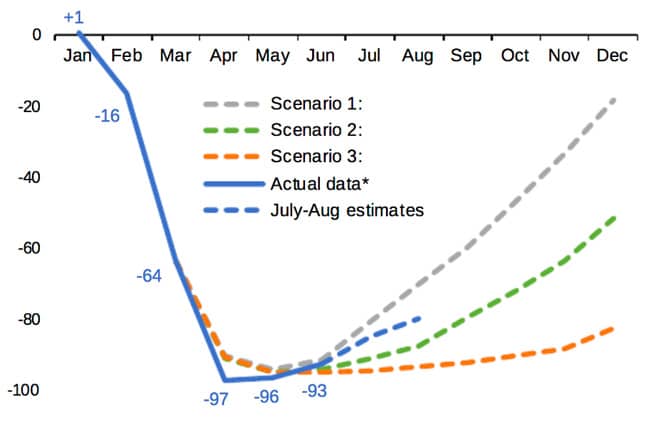
However, even if a strong rebound does occur, the UNTWO expects that it will take between 2.5 and 4 years for international arrivals to rise to the levels recorded in 2019. With events in the international education industry often mirroring those in the broader tourism sector, we can expect a similar recovery period for the world’s major study abroad destinations and education institutions.
A key to navigating this recovery will be communicating well with students, prospects, and agents and extending, if possible, product and service offerings to open up new revenue lines.
For additional background, please see:







