
Tracking student intent for study abroad through October

- Recent student surveys indicate that demand for study abroad remains strong but that most students are planning to defer their studies until a COVID vaccine is widely available and/or until campuses reopen for face-to-face instruction
- Reflecting a broad outlook for both of those important factors, the vast majority of students expect to begin their studies abroad in 2021
Two recent surveys of prospective students have arrived at very similar observations as to the impact of the pandemic on planning for study abroad. The first comes from QS, and it relies on responses from gathered through much of September 2020. An even more recent research effort from examines a comparable number of responses from prospective students collected in the first three weeks of October.
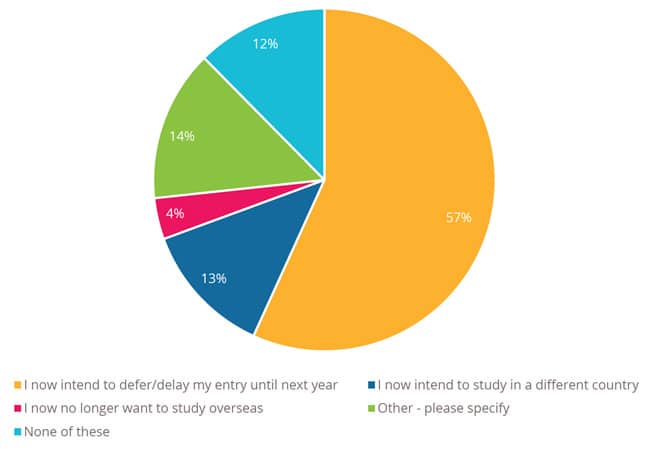
First and foremost, both studies find that demand for study abroad remains strong among prospective international students. Only very small percentages indicate they intend to cancel their study plans, with some indicating that COVID-19 has caused them to choose an alternate study destination. The vast majority, however, are still planning to defer their programme starts – and for the most part to 2021.
“During the coronavirus crisis, prospective international students are often contending with complex challenges, rapidly changing mobility and travel restrictions, and financial hardship," says QS. "Starting their studies overseas has been complicated by this challenging climate, resulting in many students choosing to delay their application process."
Nearly nine in ten (85%) of QS respondents said they believed they would begin their studies in 2021. That demand was more distributed within the educations.com sample, with roughly two-thirds expecting to start in 2021, and another 11% in 2022. Interestingly, 15% of educations.com respondents said they didn't know when they would begin their studies, suggesting a higher level of uncertainty for some students, at least compared to a similar survey conducted in March and April of this year. (At that point, only 10% responded to say they didn't know when they would begin their studies.)
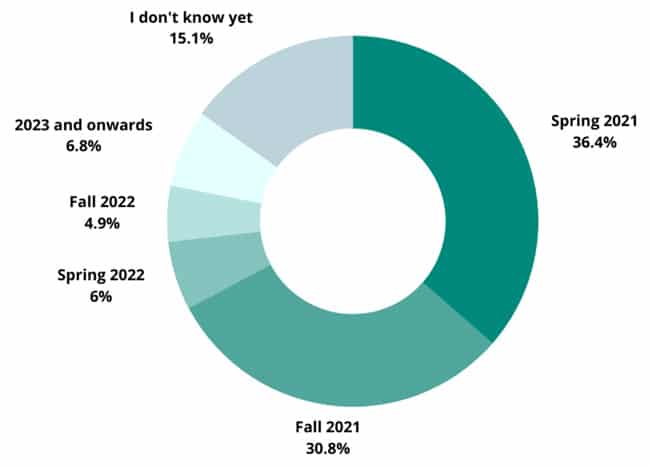
educations.com adds, however, that, "Only a minute percentage of prospective students (3.9%) plan to cancel their future study plans in response to the COVID-19 pandemic. This is similar to the very low proportion (5.4%) of prospective students in the March/April survey who intend to cancel their study plans. This demonstrates that while students are feeling increased uncertainty, they are not canceling their plans immediately. Students dedicate time and resources to their international studies, and are committed to seeing their plans through."
Those proportions are very closely echoed in the QS survey, where only 4% of respondents said that they no longer wanted to pursue studies overseas and 13% said that they now intend to study in a different country.
But the other factor that comes through loud and clear in the survey findings is that students remain highly committed to studying in-person and on-campus. In fact, this overarching drive appears to be present in students' expectations for when they will begin studies (that is, they are planning to defer to a point where they expect a return to campus will be possible) and is also an important driver in any interest students may have in switching to an alternate study destination (where students may switch to destinations that are seen to have better outlooks for pandemic response and recovery).
"More than half of prospective students in both the October (53%) and March/April (55%) surveys still expect to be traveling abroad to study on campus," says educations.com editor Carol Pang. "This is a staggering proportion in light of global COVID-19 developments and it shows how despite the current situation, many prospective students are determined to engage with the full study abroad experience."
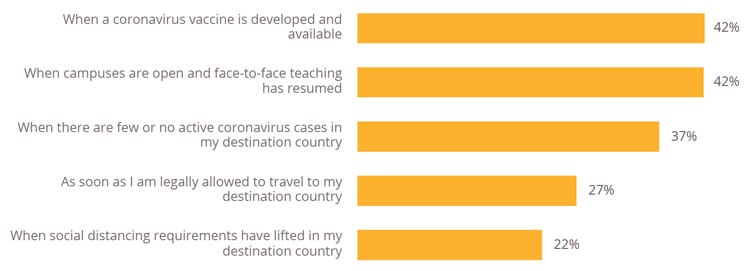
A complementary observation from QS highlights the likely inflection points for restarting student mobility on a larger scale, notably when a COVID vaccine is developed and widely available and when campuses re-open for face-to-face instruction.
For additional background, please see:







