
Nigeria: Most students want to study abroad but many also need financial aid

- Affordability is a key concern for Nigerian students and institutions that can offer financial aid or flexible tuition payment arrangements will be much more likely to secure Nigerian enrolments
- The devaluation of the naira has had a serious impact on Nigerian students’ ability to study abroad, and many are considering distance learning with a foreign institution as a more affordable option
An annual survey exploring Nigerian students’ perceptions of study abroad and the main motivations for their decisions about where to study finds that as many as 9 in 10 Nigerians are interested in pursuing a university degree with a foreign institution. At the same time, many Nigerian students cannot consider study abroad without financial assistance, and significant proportions are interested in the more affordable option of distance learning.
was produced by a consortium comprising the University of Sussex, The Student Coach, BUILA Africa, Culture Intelligence from RED and Vive Africa, and it is based on a survey of roughly 4,100 Nigerian students as well as on supplementary research. It was conducted in July through September 2021 across various regions in Nigeria.
Two-thirds of surveyed students were interested in undergraduate studies, and a third were looking for graduate programmes.
Preferred destinations
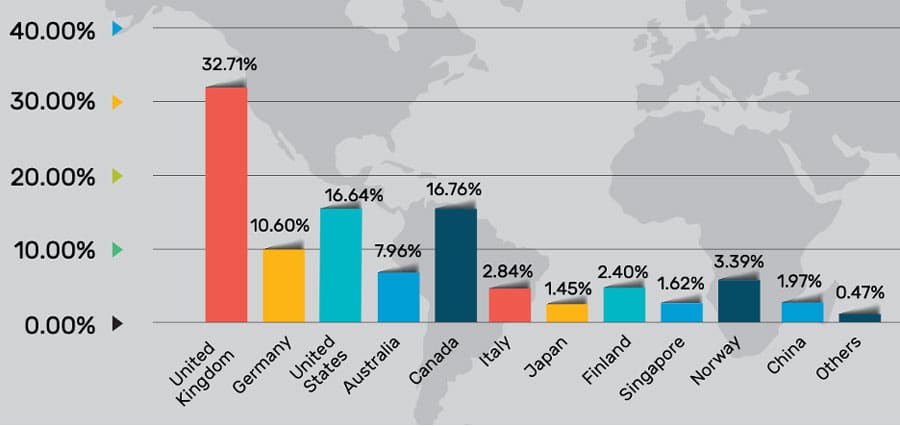
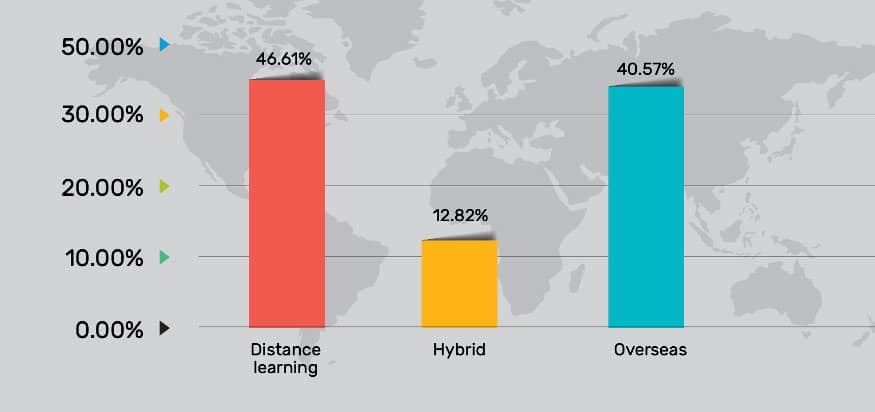
The UK, US, Canada, Germany, and Australia are the preferred host countries for surveyed Nigerian students. However, even more survey respondents indicated a preference for distance learning (46.6%) than in-person learning abroad (40.6%), perhaps as a result of financial constraints.
Scholarships, safety, and affordability are top priorities
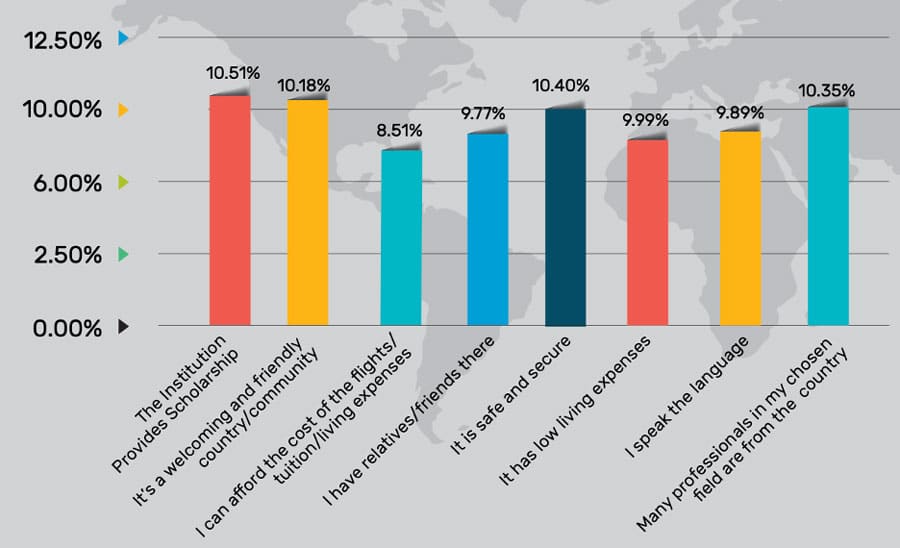
The availability of scholarships and a country’s reputation for being safe, secure, and welcoming are the most compelling draws for Nigerian students. The ability to work part-time during studies, “low living expenses,” and the presence of family or friends in a host country also factor into Nigerian students’ decisions about where to study. As depicted in the chart below, Nigerian students consider many factors when choosing where to study abroad.
Professors are key influencers and scholarships are a hot topic
Roughly 70% of surveyed students said the opinions of their lecturers, career mentors, and advisors carry the most weight when it comes to which foreign institutions they decide to apply to. Also important to students were efforts by the foreign institution to engage with them one-on-one. The report notes, “students desire a more personal, focused relationship in order to be more motivated to attend a particular institution.”
Interestingly, students were not particularly influenced by institutional marketing involving alumni, and the report suggests that communicating with faculty is likely a better bet for universities recruiting in Nigeria this year.
The most important resource for Nigerian students to engage with a university and to apply is the institutional website. WhatsApp, Skype, and Facebook Messenger follow as most-used resources.
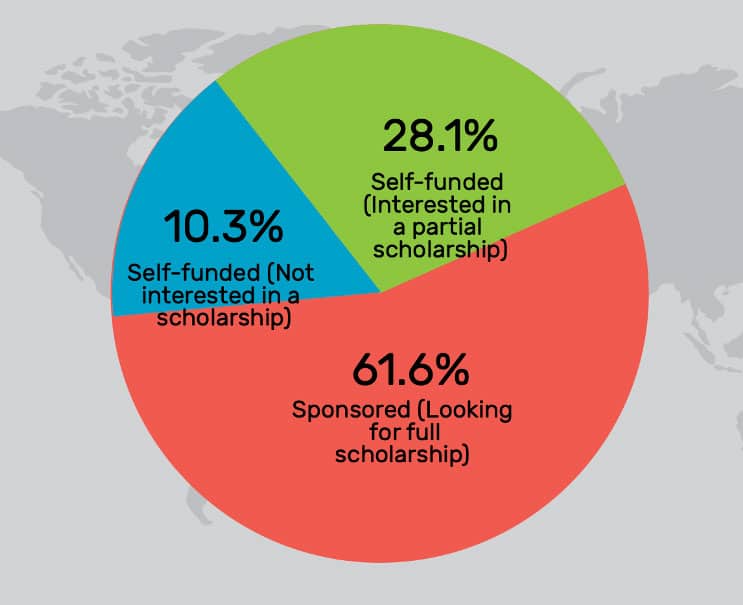
After they register, students prefer communicating with institutions through email (especially correspondence with course professors – preferred to emails from the international team or generic communications from the institution) and WhatsApp. Students find social media live sessions to be the most effective means of engaging with the institutions they have applied to; in order, Instagram Live, Facebook Live, and YouTube Live are their preferred channels for live sessions. In-person events, webinars, and “open days” follow as popular opportunities for engaging with institutions. Wherever the engagement happens, students want scholarships to be discussed, followed by academics and career opportunities. As shown in the chart below, 6 in 10 students said they were looking for a full scholarship.
Students search for ways to reduce financial burden
Most students indicated that they would prefer to pay their tuition in instalments and they look carefully at whether scholarships are available. The report emphasises that affordability remains a major issue for Nigerian students and says that this is a significant reason that many have chosen to study in China or Germany over more expensive English-speaking destinations. The report recommends,
“Universities need to innovate around providing suitable tuition payment terms and scholarship opportunities especially for students of African origin whose economic status may not be as buoyant as that of students from other continents.”
The government’s devaluation of the naira – brought on by falling oil prices during the pandemic – has had a significant impact on Nigerians, .
The pandemic has affected the popularity of certain study fields
Nearly two-thirds (65%) of students said that the pandemic has affected which programmes they apply to, and the report anticipates that interest in health-related fields such as nursing will continue to grow, particularly if there are strong post-study work rights available in host countries given “abysmal” career opportunities in the healthcare sector in Nigeria. These are the programme areas that surveyed Nigerian students cited the most frequently, in order of popularity:
- Law
- Engineering
- Health Studies and Medicine
- Business Management
- Computer Science and Information Technology
- Media Studies & Writing
A promising market with challenges
Nigeria remains a promising market for foreign institutions, but financial considerations are top of mind for students and without funding assistance, many Nigerians may not be able to study abroad in the near term. This reality may be the reason that significant proportions of Nigerians are interested in distance learning with a foreign institution. The survey findings also highlight the opportunity for universities of engaging with local Nigerian academics and of investing in personalised communications with students. Nigerian students are looking for more than generic communications from institutions and want to seriously engage with the staff at institutions they are considering.
For additional background, please see:







