
Spending by Indian outbound students could reach US$70 billion by 2025

- The number of Indian students enrolled in studies abroad is expected to climb from roughly 1 million as of 2019 to as many as 2 million by 2025
- Total student spending is expected to grow at a corresponding pace to reach as high as US$70 billion by 2025
- Indian enrolment remains highly concentrated in the big four destinations of the US, UK, Canada, and Australia, but greater numbers of students are also pursuing their studies in countries outside of those top four
- However, access to affordable and suitable student housing remains an issue across most destinations
Direct spending on study abroad by Indian students has been pegged at US$47 billion for 2022. That figure includes tuition spending as well as housing and other living expenses, and it is projected to reach as high as US$70 billion by 2025, based on current growth rates.
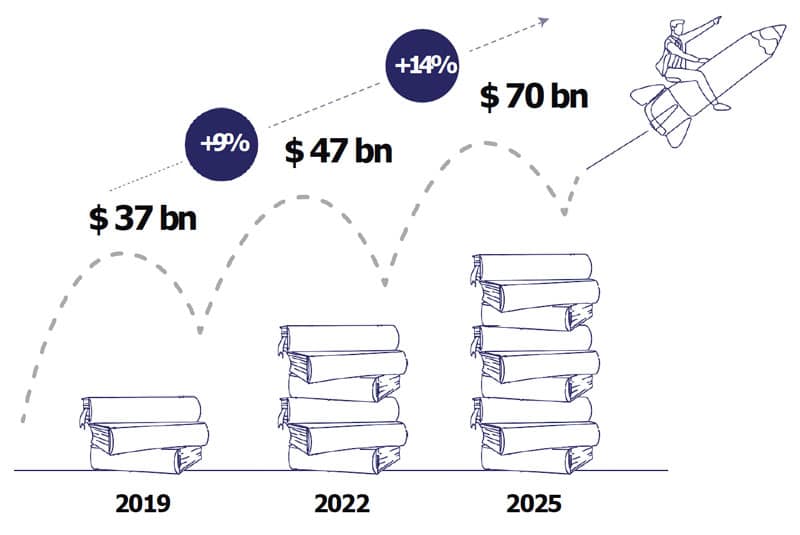
That forecast comes from a new analysis of Indian student mobility produced by University
Living. projects as well a corresponding increase in outbound student numbers from the massive Indian market. The authors estimate the number of Indian students abroad was just over 1 million as of 2019 and, if current growth rates hold, that that total could reach between 1.5 and 2 million by 2025.
That outbound mobility is highly concentrated in the "big four" destinations of the United States, Canada, the United Kingdom, and Australia. The authors estimate that there were roughly 850,000 Indian students enrolled across those four host countries in 2023, with combined student of just under US$34 billion this year. That total spend breaks down roughly into half for tuition fees and the balance on housing and living expenses.
"The data highlights the growing attractiveness of these countries as premier educational destinations," says the report, adding that the underlying data also reveals, "the considerable expenses incurred by Indian students to pursue their academic dreams. These findings not only shed light on the economic impact of Indian student mobility but also underscore the need for targeted financial support and scholarships." While the big four destinations remain very popular, issues around affordability and demand for financial support may be contributing to a wider range of destinations for Indian students as well: "Traditionally Indian students have preferred countries like US, Canada, UK and Australia. However recently other countries have also emerged as preferred destinations, including Germany, Kyrgyzstan, Ireland, Singapore, Russia, Philippines, France, and New Zealand."
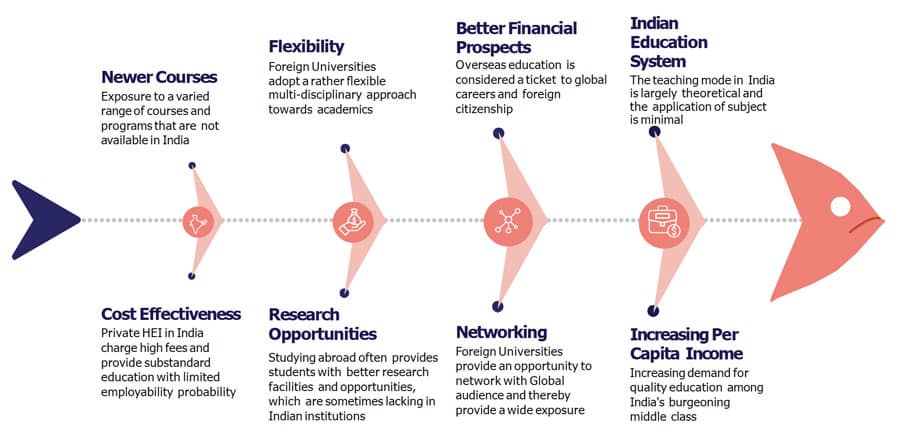
The authors point to a "quality and quantity mismatch" in Indian higher education as a primary driver of outbound mobility, noting the lack of top-ranked institutions within the country but also a lack of capacity to accommodate the growing number of students graduating from secondary schools. The following graphic illustrates some of the other important drivers of demand for study abroad.
Easing the housing crunch
The report explores in depth the available housing stock for students in leading study destinations and, not surprisingly, finds significant issues with supply across all host countries. Many of its recommendations and key findings are concerned with improving housing options for students, through which it essentially recommends a multi-stakeholder approach to address this persistent pain point in planning for study abroad.
"The key stakeholders on the supply side will have to work together to help transform the current student housing landscape," say the authors.
More specifically:
- Universities, PBSA providers, and private equity investors, are invited to invest in expanding the available housing stock. "Investing in student housing infrastructure would have a number of benefits for the entire ecosystem. First, it would make it easier for students to afford to attend university. Second, it would help to reduce the stress and anxiety that students often experience when trying to find affordable housing. Third, it would help to create a more vibrant and inclusive education communities both on the campus and around it."
- Governments are called to develop national student housing strategies and invest directly in PBSA infrastructure. "This could involve building new student accommodation, providing subsidies or tax incentives to private developers who build student accommodation, or providing grants to students to help them with the cost of rent."
"Implementing these strategies could lead to improvements in the entire study abroad journey of students and their living conditions, better utilization of resources, and more sustainable growth in the sector," concludes the report.
For additional background, please see:







