
International degree graduates of Canadian colleges no longer have to meet “field of study� requirements for post-study work permits

- The Canadian government has removed the field-of-study restriction for international students graduating from degree programmes granted by colleges
- This allows more international students in colleges to apply for the Post-Graduation Work Permit (PGWP), and it re-establishes a key competitive advantage for Canadian colleges
- The field-of-study restriction, in place for several months, had put Canadian colleges at a severe disadvantage in overseas markets
Immigration, Refugees, and Citizenship Canada (IRCC) has revised its requirements so that international students in degree programmes delivered by Canadian colleges will now no longer have to meet a field-of-study requirement to be eligible for (PGWP). That requirement had been put in place in 2024 for Canadian colleges but not universities, and it was part of an effort by the Canadian government to apply heavier scrutiny to the international education sector.
“Graduates of college degree programs will no longer be required to meet the PGWP field of study requirement,” said Canadian Bureau for International Education CEO Larissa Bezo, who was commenting on the rule change on .
Contributing to the field-of-study restriction was research showing that international students have been disproportionately represented in business programmes in Canada, particularly . By contrast, in the US, more than half of international students across degree levels are enrolled in .
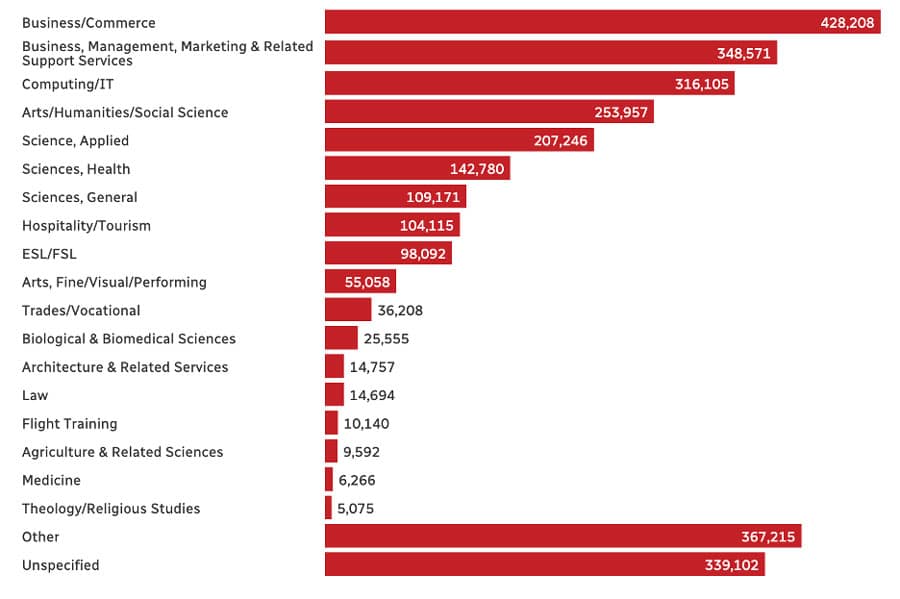
Rupa Banerjee, an associate professor at Toronto Metropolitan University who holds the Canada Research Chair in the economic inclusion of immigrants, told in 2024: "Students are graduating from programs that are not particularly valuable in the labour market, that are not allowing them to get the jobs that will then allow them to transition and become productive Canadian permanent residents.”
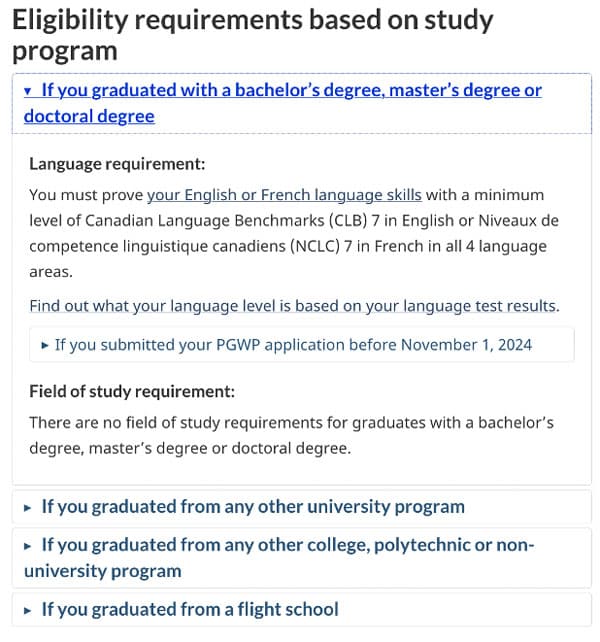
The new wording on the IRCC website clarifies that once again, students graduating from all Canadian bachelor’s and master’s degree programmes – whether from universities or colleges – are eligible for the PGWP if they meet language requirements.
Undue discrimination
While Canadian colleges have tended to enrol about twice the number of international students in business programmes as universities have, the fact is that those colleges are often highly adept at graduating students with niche skills needed by the Canadian economy – whether in business or other sectors.
The reversal of the field-of-study requirement for Canadian colleges goes some way to levelling the playing field for Canadian colleges recruiting students overseas. That said, it may take some time for Canadian colleges to restore their standing in key markets. The uncertainty and disruption inflicted by immigration policies that affected their business far more than that of Canadian universities has been severe.
On 2 October 2024, Canada’s peak body for public colleges, (CICan) wrote about the policy bias and overly general understanding of "labour market needs":
“The reforms single out public colleges to prove their programs align with national labour market needs – determined by Ottawa – in order to be considered an eligible field of study for a post-graduate work permit. New eligibility restrictions also make a false distinction between the quality and relevance of college and university bachelor’s degrees approved by their provinces.
Ottawa’s decision to align programs with national needs creates a fundamental disconnect between the pressing needs of local labour markets and the essential contributions of skilled international graduates from the over 10,000 diploma and bachelor’s degree programs in high demand fields across our network. We believe this disconnect needs to be addressed with urgency.”
Given how popular Canada’s PGWP programme is among international students, Canadian colleges will now be able to go forward on a stronger footing when recruiting foreign degree students.
For additional background, please see:







