
Netherlands reports first-ever decrease in foreign enrolment for 2025/26

- International student enrolment declined marginally over the past academic year
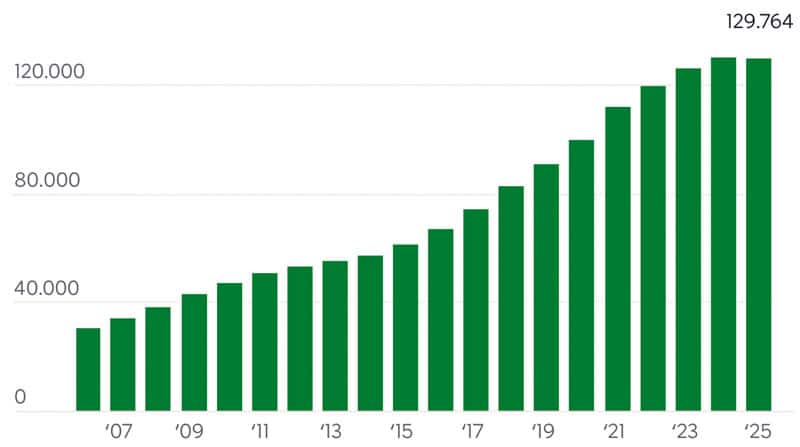
- In absolute terms, the decrease is close to zero, but it is notable nonetheless as the first such dip in 20 years
- The lower numbers in 2025/26 are concentrated at the undergraduate level, which opens the door to concerns about the impact of declining bachelor’s enrolments over time
Peak body Nuffic reports that Dutch higher education institutions enrolled . That total is 133 fewer than the year before, and represents a decrease of 0.1%.
Needless to say, that is a minor difference, but it is notable all the same as it is the first decline in 20 years. “Although it is a slight decrease, it certainly indicates a break in the trend,” says Nuffic researcher Jonatan Weenink.
Within that overall trend, commencements dipped by -0.4%, driven largely by softer undergraduate numbers. Bachelor programme enrolments declined by -3.8% for universities and -2.9% for universities of applied sciences. However, enrolments in master's programmes rose by +2.9% at universities and +8.4% at universities of applied sciences. Still, graduate-level growth is largely attributable to transfer students who were previously studying in the Netherlands.
Reflecting both on that transfer trend as well as the relatively longer-term stays of undergraduate students, Mr Weenink cautions: "The fact that intake for bachelor's programs continues to decline likely indicates that the drop in total numbers will continue for some time. If you disregard those transfer students, there is also a decline in the university master's. In the long term, therefore, the decline in the bachelor's programme also carries over to the master's.”
Indeed, we have been tracking a slowdown in undergraduate enrolments in the Netherlands over the last couple of years. The slowdown appears to be tied in part to more restrictive policies introduced by the Dutch government over the past few years, including a reduction in the number of English-taught degree programmes.
Notable shifts in sending markets
Among non-European markets, China stands as an important contributor to the weaker enrolment trend in 2025/26. Chinese commencements dropped by -27.5%, which also moved the country, for the first time, out of the top five sending markets for the Netherlands. “A possible explanation for this is the rising position of Chinese universities in international rankings, making students more inclined to study in their own country,” says Mr Weenink.
As in other leading destinations, the impact of fewer Chinese students was mitigated by an increase (+16.5%) in new master's enrolments from India.
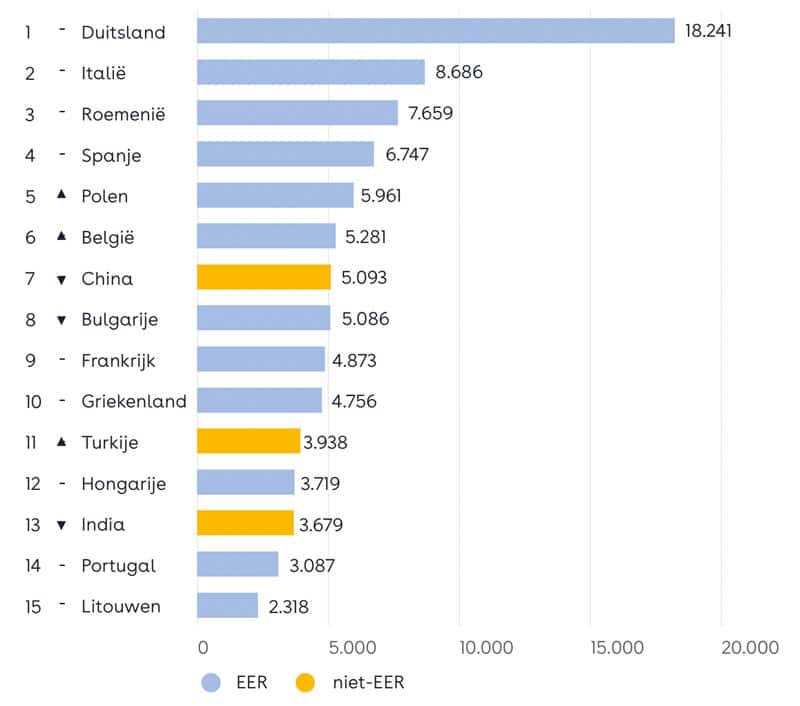
Germany has traditionally been the largest sending market for Dutch higher education, and that remains true in 2025/26. But here, too, we see a declining trend: the number of German commencements dropped by -8.9% in 2025/26. Nuffic notes that German enrolments in psychology studies have been particularly affected by new requirements for clinical master's programmes in the field that have been in place in Germany since 2020.
For additional background, please see:







